
Fire Door Compliance and Responsible Person Guidance
Fire door compliance is specialist, but understanding your responsibilities does not have to be complicated. This page sets out the key duties for the Responsible Person, why fire doors matter and how MJC supports safe, compliant management.
Who Is the Responsible Person?
Under UK fire safety law, the Regulatory Reform (Fire Safety) Order 2005, the Responsible Person is whoever has control of the premises or the relevant part of it. According to GOV.UK, this may include:
- Employer, for workplaces
- Building owner or freeholder
- Landlord or managing agent
- Occupier
- Anyone with control of the premises, such as a facilities or property manager
In residential buildings, responsibility can also sit with:
- Individual leaseholders, where their lease makes them responsible for maintaining their flat entrance fire door
- Managing agents or housing providers, where inspections or surveys are arranged centrally
- Freeholders, who remain responsible for common parts and overall fire-safety arrangements
Responsibility for the cost of maintaining or replacing flat entrance doors, communal fire doors and other fire-resisting doors varies depending on the building’s legal, ownership and management arrangements. If unsure, contact your managing agent, landlord, freeholder or premises management team to confirm responsibility.

Reporting Fire Door Concerns
Everyone in the building has a duty to report any damage, wear, defects or concerns about any fire door, including:
- Flat entrance doors
- Communal doors
- Electrical cupboard doors
- Final exit doors
- Any other fire-resisting door within the building
For traceability, concerns should be put in writing so the Responsible Person has a clear record to act on.
- Written reporting creates an audit trail
- Issues are logged and prioritised correctly
- Faster action reduces risk
- Early maintenance prevents higher repair or replacement costs
Why Fire Doors Matter
Fire doors hold back fire and smoke for a defined period, protecting escape routes and limiting fire spread. Every component must be suitable and functioning correctly:
- Door leaf
- Frame
- Seals
- Hinges
- Closer
- Clearances between door and frame
- Locks
- Latches
- Letterplates
- Spyholes
- Door chains
- Handles
- Any other fitted hardware
- Fire-stopping behind and around the frame, ensuring the frame is correctly sealed to the surrounding structure and capable of achieving its fire resistance
A door may look acceptable but still fail if installed, maintained or inspected incorrectly. Regular checks are essential throughout its life cycle.

Duties of the Responsible Person
The Responsible Person must:
- Ensure fire doors are suitable and maintained
- Arrange inspections at legally required or risk-assessed intervals
- Act on defects, damage or concerns raised
- Keep fire doors in efficient working order and good repair
- Ensure competent persons carry out inspections and maintenance
- Cooperate with other Responsible Persons where duties overlap
- Maintain records and evidence of checks, maintenance and actions taken

Acting on Survey or FRA Findings
- Where a survey, inspection or FRA identifies defects or recommended actions, the Responsible Person must act on those findings
- Any door that fails on one or more elements must be addressed and findings cannot be ignored
- Recommended actions must be completed within appropriate timeframes based on risk
- This aligns with:
- The Fire Safety Order, duty to maintain fire-safety measures
- The Fire Safety (England) Regulations 2022, Regulation 10 duties
- Approved Document B, requirement for fire-resisting doors to perform as intended
- Ignoring identified defects may breach statutory duties.
When Should Fire Doors Be Inspected?
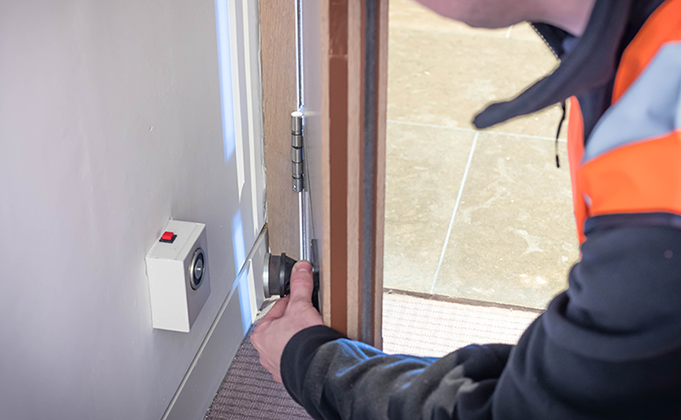
Fire doors must be inspected often enough to remain in efficient working order, in good repair, and capable of performing as fire-resisting doors.
Buildings over 11 metres, England
- Communal fire doors inspected every 3 months
- Flat entrance fire doors inspected at least once per year
- All other premises
- No fixed legal interval
- Inspection frequency must be set through the Fire Risk Assessment
- Doors must be maintained in an efficient state, in working order, and in good repair
- Fire doors should also be checked:
- After installation
- After building works affecting the door or frame
- Whenever damage or defects are identified
- After any incident that may compromise performance
- During Fire Risk Assessment reviews
Already Have an FRA or Survey?
Where a client’s survey or Fire Risk Assessment contains sufficiently detailed descriptions and supporting photographs, we can often prepare a quotation directly from the information provided.
- Subject to review of clarity
- Scope, locations and required works must be sufficiently detailed
- Accurate costing depends on the quality of the information supplied
Not Sure If Your Fire Doors Are Compliant?
If you’re unsure whether your fire doors are suitable, properly maintained, or due an inspection, get in touch. We’ll help you understand where things stand and what, if anything, needs doing next.